After the Tinsel, the Tins: Why Your Food Collection Needs a Second Wind in January
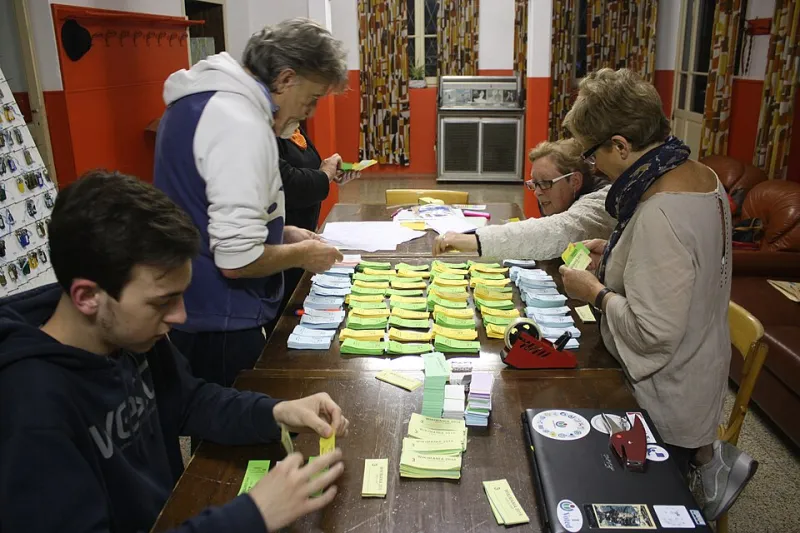
Photo: Dario Crespi, CC BY-SA 4.0, via Wikimedia Commons
Every year it happens the same way. The supermarket trolley by the door is overflowing by the second week of December. The school corridor has a mountain of carrier bags under a paper sign. Someone's hallway is stacked with boxes because the boot of the car isn't big enough. And then, somewhere around the third of January, the whole thing stops dead.
The tinsel comes down and so does the giving. Which is a shame, because that's roughly when the need gets sharper, not softer.
The need doesn't peak with the fairy lights
December is a lovely month to be generous in. It's also an unusually easy one, emotionally — the adverts help, the office whip-round helps, the kids come home with a list. January has none of that scaffolding. What it has instead is the gas bill, the first full shop of the year, the school uniform that no longer fits, and a cold snap that turns a draughty flat into a genuine problem.
Local food banks and community larders tend to report the same shape: a flood of donations before Christmas, a queue of new referrals in the middle of January, and a volunteer team who are, frankly, a bit tired. That mismatch isn't anyone's fault. It's just what happens when a collection is built around a feeling rather than a calendar.
So build it around the calendar.
The awkward bit about the Christmas pudding
Nobody wants to be ungrateful, and this isn't a telling-off. But it's worth knowing what a food bank volunteer actually does with fourteen Christmas puddings in the second week of January. Usually: finds space for them, rings round other groups, and quietly wishes they'd been asked first.
Festive extras are heavy, bulky and seasonal. Mince pies go out of date fast. Novelty biscuits take up shelving that could hold pasta. The most useful thing a collection can do in January is to be slightly boring and extremely specific.
Start with the list, not the trolley
Before anyone prints a poster, ask the food bank or larder you're collecting for what they actually want this month. Most will have a wishlist, and most wishlists look roughly like this:
- Long-life milk — UHT, semi-skimmed, the big cartons
- Cooking oil, rice, pasta, tinned tomatoes
- Tinned fish and tinned meat — the plain ones, not the premium range
- Cereal, porridge oats, spreads, long-life juice
- Toiletries: shampoo, deodorant, toothpaste, soap, razors
- Nappies in a couple of sizes, baby wipes, period products
- Laundry tablets, washing-up liquid, bin bags
Non-food items get forgotten every single time and are among the most requested. If your group can only do one thing differently next month, make it that.
Three strands, one small rota
A collection that survives past the first fortnight tends to have a few moving parts and one named person holding them together. Not a committee — a coordinator, a spreadsheet and a group chat.
Local shops. Ask the manager in person, in the quiet mid-afternoon, and ask for a short window — a Friday to a Sunday, say — rather than a month-long trolley. Shops get weary of half-empty trolleys and boxes that nobody collects. A tight, well-advertised weekend performs better and takes less staff time. Offer to collect at a fixed time and turn up to it.
Schools. A reverse Advent calendar works beautifully in December and then stops on the last day of term. Flip it: a January calendar, one item a day for the first twelve school days, starting with milk and ending with shampoo. Keep the items cheap and the list visible on the gate. Children are brilliant at this when the target is clear.
Neighbours. One drop-off point, one day, one hour. A porch, a church step, a hall foyer. What you don't want is a fortnight of carrier bags quietly rotting on doorsteps in the rain, or a volunteer driving round eleven streets collecting three tins at a time.
Two drivers, two sorting sessions, one delivery slot. That's the whole operation.
Handing it over without swamping anyone
This is the bit people get wrong out of sheer enthusiasm. You arrive, delighted, with nine crates and no warning, on the busiest morning of the week.
Instead:
- Book the delivery slot in advance and ask what their quiet hours are
- Sort before you arrive — tins with tins, toiletries in a separate box, nothing loose in a bag
- Check dates as you pack, and label any box that's short-dated so it can be used first
- Bring boxes, not bags — bags collapse, boxes stack
- Don't expect a tour or a thank-you speech. They're working
- Ask whether they'd rather have money. Often they would; cash buys exactly what's short, in bulk, with no storage problem
And one more: don't quietly set up a rival collection to the food bank's own appeal. Two appeals in one small town split the same donors and double the admin. Join theirs, or ask what they can't do and do that instead.
Keep the dignity on the shelf
A food collection is a service, not a nativity play. Which means no photographs of people queueing, no close-ups of a carrier bag being handed over, no captions about how "humbling" it all was. If you want a picture for the newsletter, photograph the crates and the volunteers — with their permission — and never a recipient.
Plain language helps too. "Donations for the local larder" is better than anything involving the words "less fortunate". And if you're collecting at a school, brief the staff: children talk, and no family should be identified by a classroom conversation.
Small, boring, repeated
A January collection isn't really a rescue mission. It's a rhythm — one that says the street is still paying attention when the decorations are back in the loft. Twelve tins in the first week of term, a trolley that appears for one weekend, a porch light on for an hour on a Sunday: none of it is dramatic.
Which is exactly why it works. December generosity is loud and lovely. January generosity is quiet, and it's the kind that actually gets a food bank through to February.