The Person at the Door: How a Twenty-Minute Hosting Shift Can Change a Whole Evening
Photo: Department of Language and Culture, Government of Telangana, CC BY-SA 4.0, via Wikimedia Commons
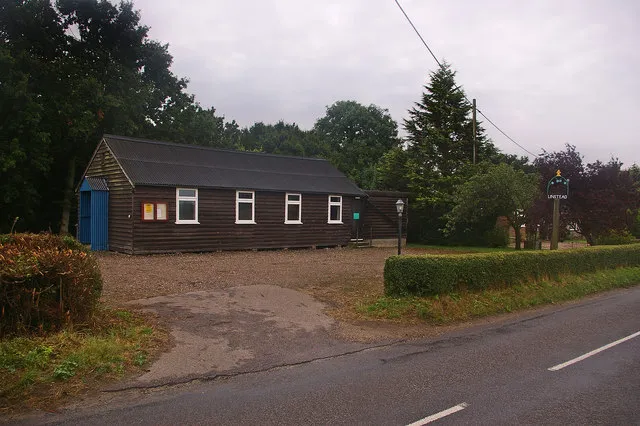
There is a particular sort of silence that happens in a village hall doorway at ten past seven. The room is full of noise, the tea urn is doing its thing, and someone is standing just inside the door with their coat still on, working out whether they know a single soul. They will give it about four minutes. If nobody speaks to them in those four minutes, they will probably come back next month — but only out of politeness, and probably not the month after that.
That is the whole case for a door host. Not a bouncer, not a clipboard, not someone checking names against a list. Just a person whose job for twenty minutes is to notice arrivals and say hello properly.
The door is doing more work than the programme
We spend a lot of time on the bits people remember afterwards — the quiz questions, the speaker, the cake. All fair enough. But the bit that decides whether they come back is usually the first ninety seconds, before any of that has happened. A neighbour who arrives to a wall of already-formed groups and a table of leaflets will conclude, quite reasonably, that this is a thing for other people.
A host changes that calculation. It is not about being relentlessly cheerful. It is about making the room feel expected. There is a difference between an event that is open to everyone and an event that has actually left the door open.
What the five minutes actually look like
You do not need a script, but a loose shape helps, especially for volunteers who are a bit shy themselves.
- Minute one: the face. Eye contact, a smile, and a name. "Evening — I'm Ruth, I'm one of the hosts tonight." That is it. No clipboard yet.
- Minutes two and three: one easy question. Not "what do you do?" and definitely not "are you new?" in a way that makes them feel inspected. Try "have you been to one of these before?" or "are you here for the talk, or mainly the tea?" Both are easy to answer and neither requires a life story.
- Minutes four and five: the hand-off. Find one person — just one — and introduce them by name with a small, true detail. "Alan, this is Priya, she's just moved into the flats on Mill Lane." Then stay for thirty seconds, and drift.
Five minutes is generous. Most welcomes take three. The point is that it is deliberate, not left to chance.
A short greeting that doesn't sound like a greeting
The trap with hosting is sounding like a call centre. A few lines that tend to work in real rooms:
- "You've timed it well — the kettle's just boiled."
- "First time? Lovely. I'll point you at the right table."
- "There's a quiet corner by the window if the front gets a bit loud."
- "Can I introduce you to someone who's also here on their own?"
Notice that none of them start with "can I help you?" — which, at a door, always sounds faintly like security. And none of them require the visitor to explain themselves.
Spotting the people who need the welcome most
Most nervous first-timers are not hard to find once you know what you are looking for. They tend to:
- arrive exactly on time, or slightly early, and stand near the door rather than in the room;
- read the posters on the wall with enormous concentration;
- keep their coat on for the first ten minutes;
- hover near the tea urn without actually pouring anything;
- check their phone as a way of looking occupied.
If you see two or three of those in the same person, go over. You do not need a reason. "I thought you might be new — I'm on the door tonight" is a perfectly good opening.
Hand-off, not hand-over
The most common hosting mistake is introducing someone to the whole room. "Everyone, this is Dave!" is a lot to ask of a person who has just walked in. It also tends to kill the conversation stone dead, because now everyone is looking at Dave and nobody is talking to him.
Aim for one person, or one small group of two or three who are already chatting. Give a name, a tiny bit of context, and a question they can pick up. Then leave. The host's job is to start the conversation, not to supervise it.
Building a rota that survives past bonfire night
A door-host rota fails in the same way most volunteer rotas fail: it is one enthusiastic person's job until they get a cold in November. A few things that help:
- Two hosts per event, not one. One at the door, one floating. It also means people can go to the loo.
- Twenty to thirty minutes at the start, ten at the end. The end matters too — saying goodbye and noticing who is leaving alone.
- A briefing card. A single side of A4: who is speaking, where the loos are, where the quiet corner is, who to fetch if something goes wrong.
- Pair an old hand with a newcomer. The new host learns by watching, and the old hand gets a break.
- A thank-you that isn't just a group chat emoji. A note, a biscuit, or a mention in the next newsletter. Hosting is work, even when it looks like standing about.
The small kit that makes a difference
You do not need much. Name stickers and a pen, a spare chair near the door for anyone who needs to sit down on arrival, a glass of water for the host, and a handwritten sign pointing to the quiet corner. If your venue has a hearing loop or step-free route, the host should know about it — and be able to point to it without making it a performance.
What to avoid
Do not turn the door into a sign-in desk for a casual social event. Do not ask people why they have come alone. Do not let the host be the only person who talks to the newcomer all evening — the hand-off is the whole trick. And do not make the welcome a test of enthusiasm. A quiet, steady hello is worth more than a big performance.
One small shift
If your committee is planning the 2026 programme now, the door host is probably the cheapest item on the list. No equipment, no risk assessment, no booking. Just a rota, a name badge, and a decision that nobody stands in the doorway unnoticed. It is a small thing to organise and a large thing to receive.