After the Last Cuppa: The Case for Joining the Tidy-Up Team
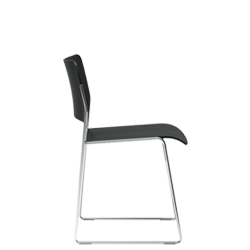
Photo: Howe a/s, CC BY-SA 4.0, via Wikimedia Commons
There is a particular moment at the end of a local do. The last slice of cake has gone, someone is hunting for a missing cardigan, and the tea urn is making that final, slightly defeated gurgle. Most people are heading for the door. A handful are not. They are rolling up sleeves, finding the blue roll and asking the most useful question of the evening: “Where do you want these chairs?”
That small crew — the tidy-up team — is the part of volunteering nobody puts on a poster. It is also, quietly, one of the best shifts you can sign up for. Not because stacking chairs is secretly thrilling, but because the last hour of an event has a different atmosphere. The performance is over, the pressure is off, and people tend to say what they really think. If you have ever wondered where the good conversations happen at a village hall, the answer is often next to the recycling boxes.
The shift that feels like a backstage pass
During an event, volunteers are usually busy being useful in public: directing cars, handing out programmes, keeping the squash flowing. The clean-up crew gets the venue to itself. You see the hall with the lights half down and the floor a bit crunchy. You find the lost property, the stray teaspoons and the one cable that nobody can identify. It is not glamorous, but it is oddly satisfying. There is a clear start, a clear finish and a visible difference at the end.
It also suits people who do not fancy a front-of-house role. Not everyone wants to greet strangers or stand by a door. Some of us would rather work alongside two or three others, with a job that is obvious and a kettle within reach. The tidy-up shift offers that in spades. You can be helpful without being “on”, and you can leave when the job is done.
What the job actually involves
Forget the idea that it is all heavy lifting. A well-run clean-up crew is a set of small, manageable tasks. One person takes the chairs, another folds the tables, someone else sorts the recycling, and somebody keeps an eye on the kitchen. There is usually a sweeper, a lost-property box and a runner for anything that needs putting back in the cupboard under the stairs.
It helps to name the roles in advance. “Chair stacker” sounds far more appealing than “general help”, and “recycling sorter” tells people exactly what they are letting themselves in for. If someone cannot lift, they can wipe surfaces, gather cups or check the toilets for leftover bags. There is no need for anyone to be a hero. The aim is a hall that is ready for the next booking, not a personal best in furniture stacking.
Recruit before the day, not at the door
Asking for help as people are leaving is a hard sell. Most organisers know this, yet it still happens. A better approach is to build the tidy-up crew into the sign-up sheet from the start. When people offer to help at the summer fair or the quiz night, give them a choice of slots: setting up, during the event, or the final hour. Some will pick the last one precisely because it fits around family commitments or a preference for quieter work.
A simple online form or a paper sheet by the door can do the job. Add a note about the finish time — “we aim to be out by 6pm” is reassuring — and say whether there will be tea and biscuits. It sounds small, but it answers the question everyone is really asking: will this take over my whole evening?
Make it social and low-pressure
A clean-up shift works best when it feels like a small gathering with a job attached. Put a radio on. Make a fresh pot of tea. If the event has leftover biscuits, open them. If the hall has a decent speaker, make a shared playlist. The atmosphere should say: this is the wind-down, not the punishment.
It also helps to create a proper ending. When the last chair is stacked, stop. Do not let the shift drift on into an hour of odd jobs. A five-minute sit-down with a cup of something is a good way to mark the finish. Some crews even head to the local pub afterwards, which is less about the pub and more about the fact that they have done something together.
A simple checklist for organisers
- Name a clean-up lead who is not also running the whole event.
- List specific roles in advance: chairs, tables, kitchen, recycling, floors, lost property.
- Set a realistic finish time and stick to it.
- Ask for volunteers at sign-up, not just on the night.
- Provide gloves, blue roll, bin bags and a clear place for recycling.
- Put someone on tea duty for the crew.
- Say thank you properly — a short message the next day goes a long way.
The conversations you only get at the end
Here is the thing about the final hour: people relax. The raffle is drawn, the announcements are done, and the volunteer who was too busy to chat at 7pm is suddenly free at 9.30pm. You end up talking about the school run, the bus timetable, the leak in the church roof or the fact that someone’s grandson has just started at the same college as your neighbour’s daughter. These are not grand conversations, but they are the ones that make a place feel like somewhere you belong.
For newcomers, that can be a quiet route in. You do not have to arrive knowing everyone. You turn up, take a job, and let the conversation happen while you work. By the time the last table is folded, you have met three people and learned where the spare bin bags live. That is a decent return on an hour.
A small civic ritual
There is something ritualistic about the end of an event. The hall empties, the chairs go back, the lights go off one by one. It is the same every time, and that is part of the comfort. The tidy-up crew is not just clearing a room; it is closing a loop. The next group will walk in to a clean floor and a stack of chairs that is not leaning at a dangerous angle. That is a quiet gift to whoever comes next.
So if you are asked to stay for the last hour, consider saying yes. Not every time, and not if you are already exhausted. But once in a while, it is worth seeing an event from the other side of the last cuppa. Bring comfy shoes. Bring a friend if you can. And do not worry about the cable nobody can identify — every village hall has one, and it is probably fine.