Before the Bins Go Out: The One-Envelope Welcome That Makes a New Street Feel Known
Moving house is a strange kind of admin. One week you're surrounded by boxes and a stranger's carpet; the next you're expected to know which bin goes out on a Tuesday and where the nearest pharmacy is. A welcome envelope won't unpack the kitchen, but it can shave a few days off that foggy feeling — and it tells a new resident that someone on the street noticed they arrived.
The trick is to keep it small. Not a folder. Not a laminated dossier. One envelope, one sheet, one name, one small thing that earns its place on the fridge.
Start with the questions they'll actually ask
Forget the grand tour. The first week's questions are relentlessly practical: which bin, which night, which shop, which GP, which bus. Build the sheet around those and you'll be useful. Add the parish council website and the village hall's what's-on page, and you're already ahead of most letting agents.
In 2026, the temptation is to send a link to a group chat and call it done. A link is useful; a sheet is better, because it works when the Wi-Fi doesn't.
A good crib sheet covers:
- Bins. Collection day, which container, what happens on bank holidays, and the council's missed-bin number. If garden waste is a paid subscription, say so — it saves a confusing phone call.
- The basics nearby. Nearest postbox, convenience shop, pharmacy, GP surgery and bus stop. A one-line walking time is more useful than a postcode.
- Help, plainly stated. The local food bank, the warm space at the church hall, the repair café, the library. No commentary, no eligibility quiz — just names, days and a phone number. If someone doesn't need it, they'll skip it. If they do, it's there.
- One group. The street WhatsApp or the neighbourhood watch email list, with a note on who to ask to join. Don't add anyone without asking.
What to leave out? Vouchers for a takeaway, a leaflet from a local candidate, a list of thirty tradespeople, and anything that needs a reply. The envelope is a hello, not a contract.
Give them a name, not a committee
A sheet of numbers is fine. A person is better. Pick one neighbour — with their permission — who is happy to be the 'knock for anything' name: the person with a ladder, a spare key for the cat feeder, or simply a kettle and a reasonable knowledge of the council's phone menu.
Print it plainly: 'If the boiler makes a noise or you can't find the stopcock, knock at number 14 — that's Dev, and he's expecting you.' Then tell Dev you've done it. A named neighbour turns a street into a place where asking for help is normal, which is the whole point.
One small thing that isn't a takeaway menu
The best small gift is the one that stays visible after the boxes are gone. A fridge magnet printed with the bin day, the street group QR code and the council's missed-bin line costs very little and gets looked at every week. It's not glamorous. That's why it works.
If you want to add a tea bag and a biscuit, fine. But keep the magnet as the anchor: it's the difference between a nice gesture and a useful one.
Deliver it like a person, not a leaflet drop
Post it when you're likely to catch them, or knock, hand it over and say who you are. Two minutes on the doorstep beats any wording. If they're mid-unpacking and clearly frazzled, say you'll leave them to it and point at the sheet. If there's a 'no junk mail' sticker, respect it — knock instead, or post a handwritten note with your name and number.
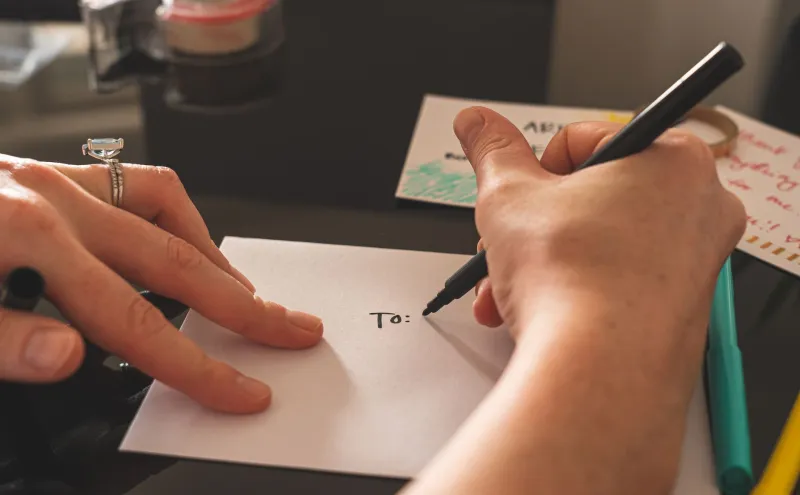
Handwrite the envelope. Put their name on the sheet, not 'Occupier'. Avoid logos, laminates and anything that looks like it came from the council. The whole thing should feel like it came from a person three doors down, because it did.
Keep it current without turning it into a job
A welcome pack goes stale quietly. Bin days change, bus timetables get cut, the warm space moves to a different hall. Keep a master copy on your phone or in the kitchen drawer and check it twice a year — January and just before the clocks change is a decent rhythm. When the council changes collection days, update the magnet order too; a wrong bin day is worse than no bin day.
Ask the next new arrival whether anything was missing. They'll tell you something you'd forgotten, usually about parking or school gates.
Why it matters more than it looks
A new resident who knows the bin day and one friendly name is a resident who is much more likely to ask for help when something bigger goes wrong — a burst pipe, a hospital stay, a bill they can't quite cover. That's not sentimentality; it's the quiet machinery of a street that looks after itself. The envelope is small. The message isn't: you're not on your own here. Welcome.