The No-Questions Coat Rail: A 2026 Winter Warmth Drive That Feels Like a Shared Wardrobe
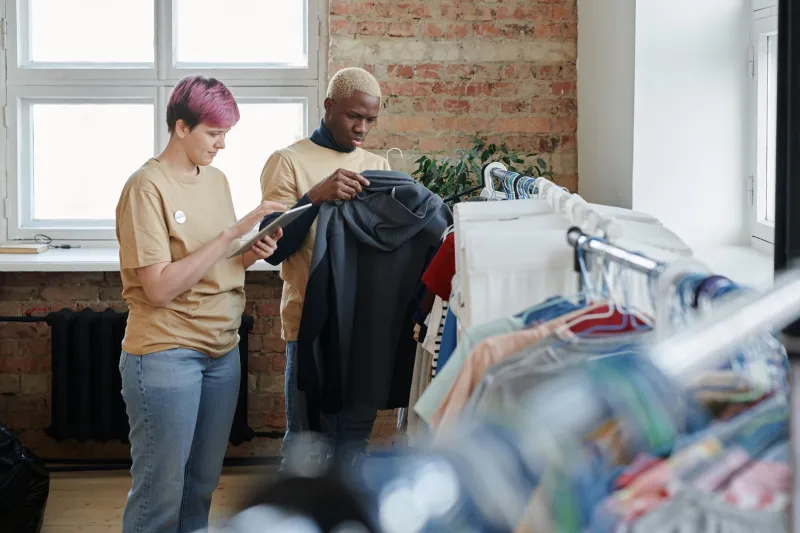
On a damp November morning in 2026, the most useful thing in your village hall might be a sturdy clothes rail and a box of mixed hangers. Not a fundraising thermometer. Not a laminated policy. Just coats, clearly labelled, in a warm room where nobody has to explain why they came.
The spare coat project is simple in theory: neighbours donate clean, good-condition winter coats, and other neighbours take what they need. No means test. No referral form. No clipboard asking for a postcode and a reason. The trick is in the details — the way the rail is set up, the language on the signs, the rota behind the scenes — because those details decide whether it feels like a shared wardrobe or a charity queue.
Start with the rail, not the appeal
It is tempting to begin with a big call-out on social media. Resist that for a week. First, find a rail that will not wobble when someone reaches for a size 16 waterproof. Ask the hall committee where it can live: near the entrance is good, but not so exposed that every visitor feels watched. A side room, a curtained alcove or a quiet corner with a mirror and two chairs will do more for dignity than any poster.
Then write the sign. Keep it short. Something like: 'Winter coats. Take one if you need one. Leave one if you can. No need to ask.' Add the opening times in large type. Put a small line underneath: 'Everyone is welcome here.' That is not a slogan; it is the whole operating model.
What belongs on the rail — and what does not
The rail should look like something you would be pleased to wear, not a last stop before the tip. Coats, fleeces, padded jackets, waterproofs, hats, scarves and gloves are all fair game. Check zips, buttons, linings and pockets. Give everything a wash or a proper airing. If a coat needs a repair you can manage with a needle and thread, do it before it goes out. If it needs a dry clean, ask a local cleaners whether they will help with donated stock.
Label sizes clearly, but do not get precious about it. A coat marked 'M' that fits a tall teenager is still a good coat. Keep a small box of safety pins, spare buttons and a lint roller behind the rail. Put out a mirror. Nothing makes a rail feel more like a shop and less like a crisis service than a mirror and a bit of space to try something on.
What does not belong? School uniforms, underwear, broken zips, coats with damp patches, and anything that smells of a garage. If you would not lend it to a friend, do not hang it. A quick quality-check shift on a Thursday evening saves a lot of quiet disappointment on a Saturday morning.
The quiet rules of a dignified rail
Dignity is mostly about what you do not do. Do not ask people why they are there. Do not ask them to prove anything. Do not take photographs of visitors for the newsletter. Do not announce from the stage that donations are available. Do not make anyone say thank you to a room of volunteers.
The best volunteers are the ones who can say 'Morning, help yourself, kettle is on' and then leave it there. If someone wants to chat, chat. If someone wants to take three coats for their family and leave without a word, that is fine too. Put out carrier bags. Keep a chair nearby. Have a box of tissues, because winter coats and cold mornings can bring unexpected feelings.
A gentle sign saying 'Take what you need. Leave what you can.' works better than a rule about one per household. Families come in different shapes. A grandparent might be collecting for a teenager. A neighbour might be picking up a coat for someone who cannot get out. Trust them.
Rotas that do not burn people out
A coat rail can run on two-hour shifts. Two people per shift is plenty: one to greet and one to keep the rail tidy. Add a set-up and pack-down pair if you can. Use a simple online sign-up sheet or a paper rota on the hall noticeboard — whichever your volunteers actually use. Have one named coordinator who knows where the spare hangers live and who to call if the boiler fails.
Brief volunteers properly. Tell them where the bags are, what to say if someone asks whether the coats are free, and what to do if a donation arrives that is not suitable. Give them permission to say 'I'm not sure, let me find out' rather than inventing an answer. Keep a tally of coats in and coats out if you like, but do not record personal details. This is not a casework service. It is a rail.
Schools, charities and the awkward handover
Local schools, health visitors, food banks and warm spaces can be brilliant allies, but the handover needs care. Ask them to mention the rail, not to refer people to it. A postcard in a school office is fine. A list of names passed between agencies is not. If a school runs a collection, ask for clean coats with sizes on the label, and make sure the message home is 'donations welcome' rather than 'please prove you are struggling'.
Charity partners can hold a few coats for someone who cannot get to the hall. Keep that arrangement small and informal. The point is to remove obstacles, not create a second queue. If a local business wants to help, a dry cleaner, a launderette or a hardware shop is often more useful than a logo on a banner.
The small extras that make it feel like a wardrobe
Put a kettle on. Add a few chairs. Leave out a sewing kit and a box of spare buttons. Have a children's corner with a couple of books so parents can look properly. Write the opening dates on a chalkboard and update it. If you have a mirror, clean it. If you have a rail, make sure it is not crammed so tightly that nobody can browse.
In 2026, the cost of heating and the price of a decent coat are still pressing on plenty of households. A village hall rail will not fix that. But it can take one sharp edge off the winter, and it can do so without making anyone feel small. That is worth a few hangers.
After the last hanger
At the end of the season, wash or air anything that is left, store it dry, and decide what to keep for next year. Offer surplus to a local charity shop or a partner organisation rather than leaving it in a damp cupboard. Write one page of notes: what worked, what ran out, which signs confused people, how many volunteers you actually needed. Next November will be easier for it.
The spare coat project is not a grand civic scheme. It is a rail, a sign and a rota. But done quietly and well, it tells your neighbours something useful: that there is a warm room, a decent coat and no questions asked. That is the kind of winter warmth Bwif Community likes to see on a village hall noticeboard.