The Door Is Only Half the Job: A One-Afternoon Accessibility Walk-Round for Your Next Local Do
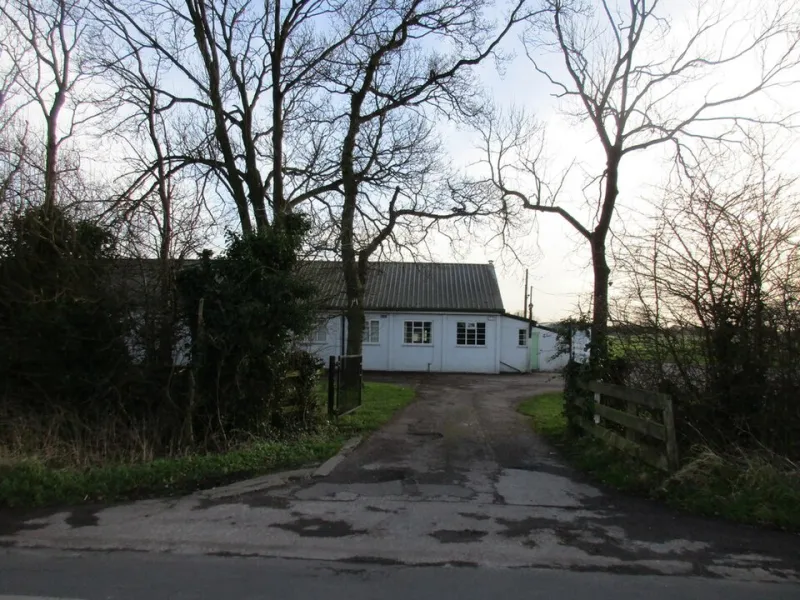
Photo: Jonathan Thacker, CC BY-SA 2.0, via Wikimedia Commons
Most village halls are run by people who care a great deal and have roughly four hours a week to prove it. That's precisely why accessibility gets parked until someone complains — and by then the person who couldn't get in has already gone home and quietly decided not to bother again.
This isn't a telling-off. It's a suggestion for one afternoon in 2026 with a clipboard, a torch, a tape measure and a second pair of eyes, ideally before the winter fair or the next film night. Because good hosting, when you boil it down, is just noticing things on behalf of people who aren't in the room yet.
It's hosting, not box-ticking
There's a version of accessibility that lives in a folder marked 'policy' and gets dusted off when a grant application asks for it. There's another version where you stand in the car park on a wet Tuesday and imagine arriving with a walking frame, or a guide dog, or a buggy, or a bad hip and a strong desire not to make a fuss.
The second version is more useful, and it costs nothing but an hour of imagination. Nobody is asking you to rebuild the hall. Most of what shuts people out is small, cheap and fixable with a laminated sign and a bit of honesty.
Start where people actually arrive
Before you look at the doors, look at the journey to them. Where's the drop-off point, and is it somewhere a driver can stop without blocking the lane? Is the path level, and does the lighting work in November when it's dark by half four? Are there loose slabs, or a puddle that becomes a small lake every winter?
Then the threshold — the bit everyone forgets. A ramp at the main entrance is lovely, but is it wide enough for a wheelchair, clear of bins, and free of a lip at the top that catches front wheels? Is the door itself light enough for someone with arthritis to pull, or does it need a second person? Is there a bell at a reachable height, and does anyone answer it?
One cheap fix worth its weight: a small, honest sign saying 'Step-free route this way' with an arrow, plus the distance. 'Around the side, 30 metres, slight slope' tells someone far more than a blue badge symbol ever will.
Ask about the loo properly
Almost every community venue has an accessible toilet, and a surprising number use it to store the trestle tables. Have a look. Is the grab rail still attached? Is the floor clear? Can a wheelchair turn inside? Is the lock one that can be opened from outside in an emergency?
And then the quiet bit: is there a second toilet someone can use if the accessible one is occupied, because a queue outside the only usable loo is its own kind of exclusion. If you're hiring a portable loo for an outdoor event, check whether there's a step up to it before it arrives, not after.
Can people hear you?
A hearing loop that's switched off, or switched on but not connected to the microphone, is worse than no loop at all — it creates false confidence. Test it. Ask someone who wears a hearing aid to try it during a rehearsal rather than during the raffle.
Beyond the kit, the habits matter. Use the microphone even in a small room. Face the audience when speaking. Don't talk over music. Repeat questions from the floor before answering them, because half the room didn't hear the question in the first place.
The quiet corner
Not everyone can manage an hour of chatter and strip lighting. A table in a side room, a couple of chairs away from the speakers, or even a labelled 'quiet corner' with a kettle nearby gives people somewhere to regroup — and it's usually the most-used corner of the entire event.
Have a think about the exit, too. People who find crowds difficult like to know they can leave without a performance. If your only way out is past the stage, consider whether the side door could be opened and clearly signed.
Words that work
Information is part of the building. A poster in 11-point grey italics is a closed door.
- Use plain English, short sentences, big print (16-point minimum for posters).
- Say what's true: 'Two steps at the main entrance, step-free round the back.'
- Put the important stuff — time, place, cost, whether there's parking — near the top.
- If you're posting online, add alt text to images and don't put the only details inside a picture of a poster.
- Offer a phone number for anyone who wants to ask a question without an audience.
Cheap fixes you can do before Saturday
A handful of things that cost less than a round of teas: a temporary ramp or threshold strip for the side door; a battery doorbell at wheelchair height; a laminated step-free route map; a working torch by the back gate; a 'please keep clear' sign on the accessible loo door; printed large-print copies of the running order; a named person on the door whose only job is to help people in.
Who to ask for help
You don't have to work this out alone. Your local authority's access officer or equality team often gives free advice. Disability charity shops and user-led groups in the nearest town usually know exactly which halls are nightmares and why. The hall's own insurer may have views on temporary ramps. And if you're spending grant money, ask the funder — many will happily pay for a hearing loop or a proper threshold ramp if you name it in the application.
Best of all, ask the people who stopped coming. A short, kind phone call — 'we're trying to get this right, what would help?' — is worth more than any audit form.
The checklist
- Drop-off point clear and signed
- Path level, lit, gritted in winter
- Step-free route identified and described in plain words
- Doors light enough, or held open by a named volunteer
- Accessible loo unlocked, uncluttered, rails sound
- Hearing loop tested and used
- Quiet space available and labelled
- Large-print information ready
- Someone on the door whose job is welcoming, not ticketing
- A note of what you'll fix before next time
None of this is grand. It's the same instinct that makes you put out extra chairs and check there's enough milk. Ordinary good hosting, aimed at everyone — which is really the whole point of a community event in the first place.