The 8:15 Homeward: Putting the Last Bus on the Poster, Not in the Small Print
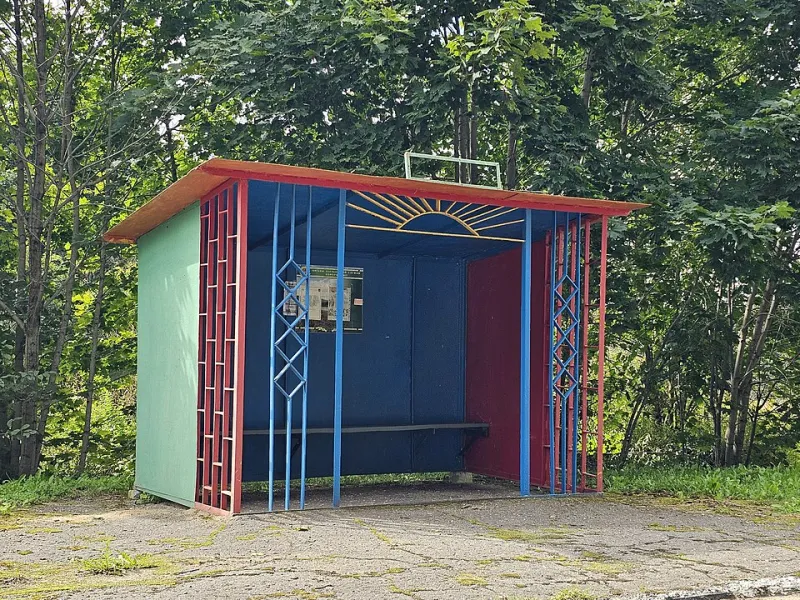
Photo: Tess Mattew, CC BY-SA 4.0, via Wikimedia Commons
There's a particular kind of November evening in a village hall that feels almost perfect. The urn is on, the chairs are out, someone's brought a plate of something with icing on it, and the room is warm in that slightly over-lit way that only happens when forty people are breathing in the same space. Then the clock creeps towards half eight, and you notice a handful of people glancing at the door. Not because they're bored. Because they're doing sums in their head about the walk to the bus stop.
We spend a lot of time, rightly, talking about ramps and hearing loops and whether the loo is reachable. All of that matters. But there's a quieter barrier that doesn't show up on any accessibility checklist, and it's the one that decides whether your neighbour actually comes back next month: can they get home?
The bit of accessibility nobody photographs
A step-free entrance is no use if the only way back is a forty-minute walk along an unlit lane in the dark. A lovely welcoming atmosphere doesn't help much if the last train leaves before the raffle. And the timetable, unlike the door width, is invisible from inside the hall.
This isn't about blaming anyone. Event organisers are busy, and most of us plan around the venue because that's the bit we can control. But transport is the bit that quietly sorts the room into those who can stay and those who can't. It's worth a proper look, especially now, with the evenings drawing in and a run of Christmas dos, carol evenings and quiz nights on the horizon.
Check the timetable the way you check the fire exits
When you book a hall, you probably glance at the exits, the kitchen, the parking. Add one more thing to that list: the last service home. Not the one you'd catch, necessarily. The one a person on the other side of the village, or the next one along, would need.
It helps to be specific rather than general. "There are buses" is not the same as "the last bus towards the town leaves the crossroads at 21:12, and there's one on Sundays but only until six." Write it down. Note which operator runs it, whether it's a demand-responsive service you have to ring ahead for, and whether the stop is the one by the pub or the one a bit further up.
If you're not sure, Traveline and the operator's own app are the obvious ports of call, and the parish clerk often knows the quirks that no timetable admits to. For rural routes, a quick ring to the operator is worth more than a glance at a laminated sheet from three years ago.
What the poster should actually say
Here's a small change that costs nothing. Put a line near the bottom of the flyer, in the same size text as the start time: "Last bus home: 21:12 from the crossroads." Or, if the event genuinely runs later, "Event ends 21:00. If you need a lift or a walking buddy, tell us when you book and we'll sort it."
That one line does three things at once. It tells people they've been thought about. It gives them the information to plan, rather than discovering the problem at ten past nine with their coat already on. And it flags, honestly, that the evening might need to end earlier than the committee's original grand plan.
Sometimes the right answer is to shift the start time twenty minutes earlier. Sometimes it's to put the quiz round before the interval rather than after. Occasionally it's to accept that the last hour is for the people who live close enough to walk, and to say so cheerfully rather than pretending otherwise.
Buddy walks, and the polite art of the offered lift
Not everyone wants a lift, and not everyone should be put in the position of having to ask. A simple, opt-in arrangement works better than a well-meant scramble at the door. A tick-box on the sign-up sheet — "happy to walk home with someone" or "would appreciate company on the way back" — is enough to start. Pair people who are going the same way, and mention it in the welcome bit at the top of the evening so nobody feels singled out.
For lifts, the golden rule is to offer before the night, not at the end when everyone's tired and the car park's emptying. A line in the WhatsApp group a few days before — "anyone need a lift from the top end? Two seats going" — is friendly and undramatic. Keep it informal, keep it voluntary, and don't turn it into a rota that makes people feel obliged.
Watch out for the Sunday trap
Sunday services are the great under-estimated hazard of community life. The bus that runs every twenty minutes on a Saturday may run twice on a Sunday, and the second one may be at 17:40. A Sunday afternoon tea that finishes at five is, for some people, a request to leave early or not come at all.
December brings its own wrinkles: bank holiday timetables, reduced evening services, and the annual confusion about whether the 19:05 still runs between Christmas and New Year. If you're planning anything in that window, check twice and write it down. A quick note on the door — "no buses after 6pm on Boxing Day, lifts available, ask at the desk" — is the sort of small kindness people remember.
Test it yourself, once
Here's a thing worth doing at least once a year, ideally before the winter programme kicks off. Pick a dark, ordinary evening, and walk from the hall to the nearest stop the way a less confident person would. Is the path lit? Is there a pavement, or is it a verge? Does the stop have a shelter, or is it a pole in a hedge? How long does it actually take, allowing for someone who walks slowly or uses a stick?
You'll learn more in twenty minutes than in an hour of committee discussion. And you'll probably come back with two or three small fixes — a request to the council for a light, a note in the newsletter about the safer walking route, a bench moved to a more sensible spot — that make a real difference.
The small print is the welcome
None of this is glamorous. It won't make the front of the newsletter. But inclusion isn't only about the doorway; it's about the whole round trip, from the front door to the hall and back again. If we want the room to look like the street, the timetable has to be part of the planning, not an afterthought scrawled on a scrap of paper by the door.
So next time you're sorting the chairs, spare a thought for the 8:15. Put it on the poster. Say it out loud at the start. And if it turns out the evening needs to end a little earlier to keep everyone in the room, that's not a compromise. That's the whole point.